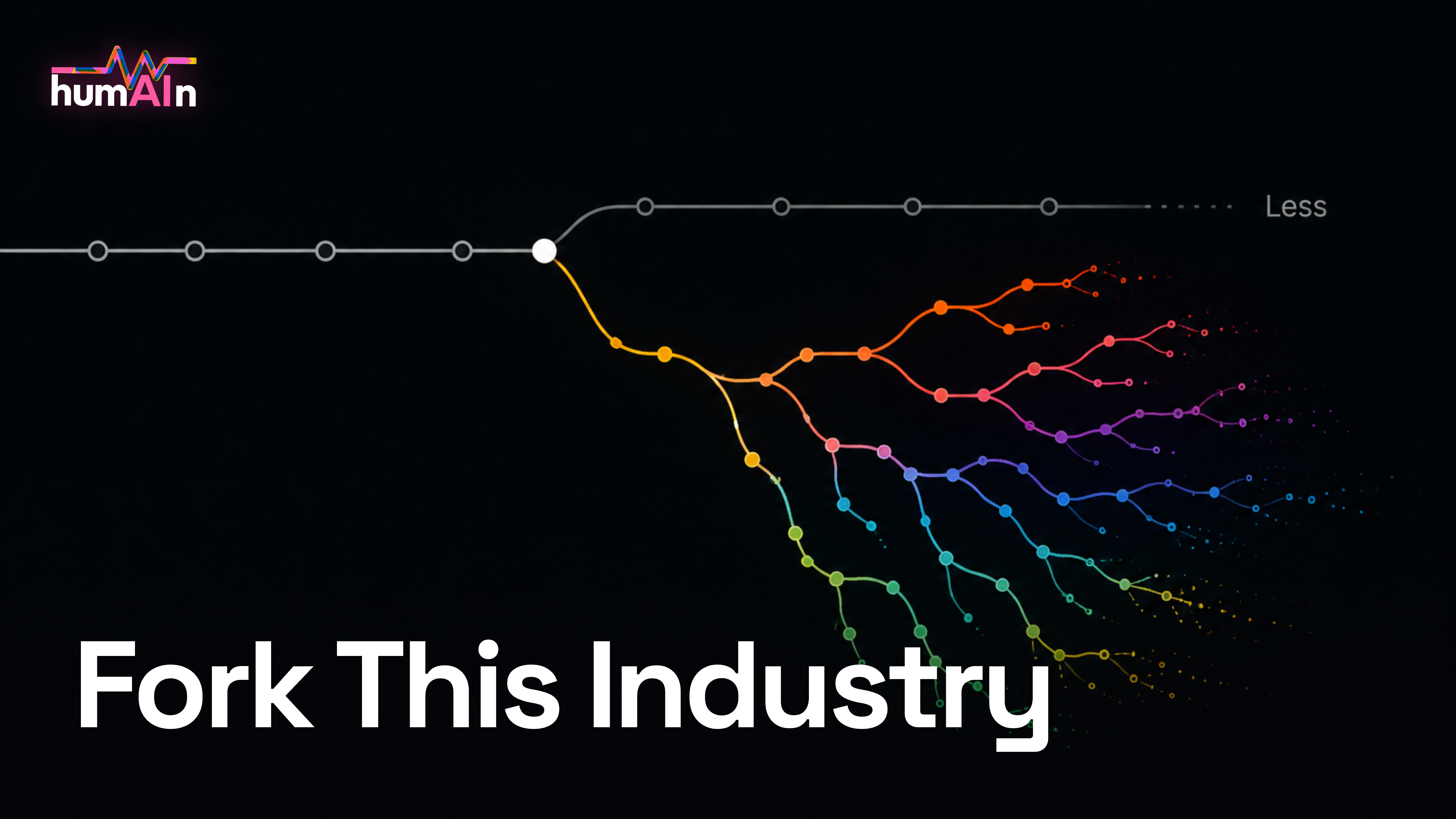
In software development, a fork is when someone looks at a project and decides it’s heading in the wrong direction. They take the code, split from the main branch, and build something new.
Our industry is at exactly that point, and we have the chance to fork it.
DDB is 77 years old. Bernbach's shop, the agency that made advertising worth talking about, is being retired this year, along with FCB and MullenLowe, their people and clients divvied up amongst the survivors. Here, everything rolls into Omnicom Oceania: creative, media, PR, performance, production — one structure to rule them all. More than than 10,000 redundancies globally — not headcount, but humans with mortgages and children to feed, whose labour won and kept the clients.
When WPP retired GroupM, the largest media buyer in the world, the layoffs began within weeks of the rebrand.
We need to be extremely precise about the cause, because the industry at large is avoiding eyeballing it. It’s merger maths: Omnicom doubled its post-IPG synergy target to $1.5 billion, and wants to bank $900 million by the end of this year. Nearly a billion of that saving is labour - not machines, people. The holdco has confirmed 4,000 roles will go to hit the number.
Artificial intelligence is the fig-leaf, the narrative being laundered: the new entity announces itself as an AI-powered, data-led marketing machine, and “technology” is pasted into the press release where "duplication" would be a great deal more honest.
Meanwhile, AI is actually taking cost out of making things: research, production, versioning, the invisible middle of every agency workflow. Which is what makes this moment the pivotal fork in the road. Whether the savings come from machines or the merger, they are flowing to the same place, and it isn't the work.
So far, our ‘creative’ industry has responded with the only idea a spreadsheet can have.
Less.
There is another path - and this isn't wild speculation or unfounded optimism. When IKEA's marketing function found significatn efficiency gains through its use of AI, the money went back into the brand. The company retrained its customer service staff to provide interior design services, preserving jobs, driving innovation, and creating a brand-new revenue stream.
Les Binet recently warned against the death spiral for brands prioritising efficiency over effectiveness. "We're all trying to do more with less. And I think that's killing our industry," he said.
We've spent thirty years teaching clients that effectiveness beats efficiency. Strange, then, that the first thing we do when presented with efficiency gains is cut the thing that produces effectiveness.
So the fork exists, and the future does have a map. There are case studies with revenue lines, proof of concepts that have delivered.
And still, the industry defaults to less, because less is legible. The author of a cost cut easily survives a board meeting when a leader announcing "we reinvested the savings in taste and trust" may not, even though taste and trust are now the only line items your competitors can't automate.
When production is nearly free, sameness is nearly free.
Everyone gets fluency, competence. The expensive things, the only expensive things left, are judgment, specificity, and the audacity to make something a machine wouldn't have suggested.
It's why the smartest operators are already spending the dividend in the other direction - running unbriefed, speculative campaigns as pure R&D, racing each other upstream to the one thing that remains scarce when production is free: the opportunity nobody has spotted yet.
This is the fork. Both branches come from the same windfall, but while one veers toward less - less bravery, less creativity, and ultimately fewer jobs - the other runs towards better, bolder work; the “what if?” that got us all into this industry in the first place.
I use these tools every day. The dividend is real. I'm not asking anyone to turn it down.
I am, however, asking who decided that the windfall from the most powerful creative technology in human history should be spent making the work cheaper instead of better, and whether anyone in the room spoke up when they did.