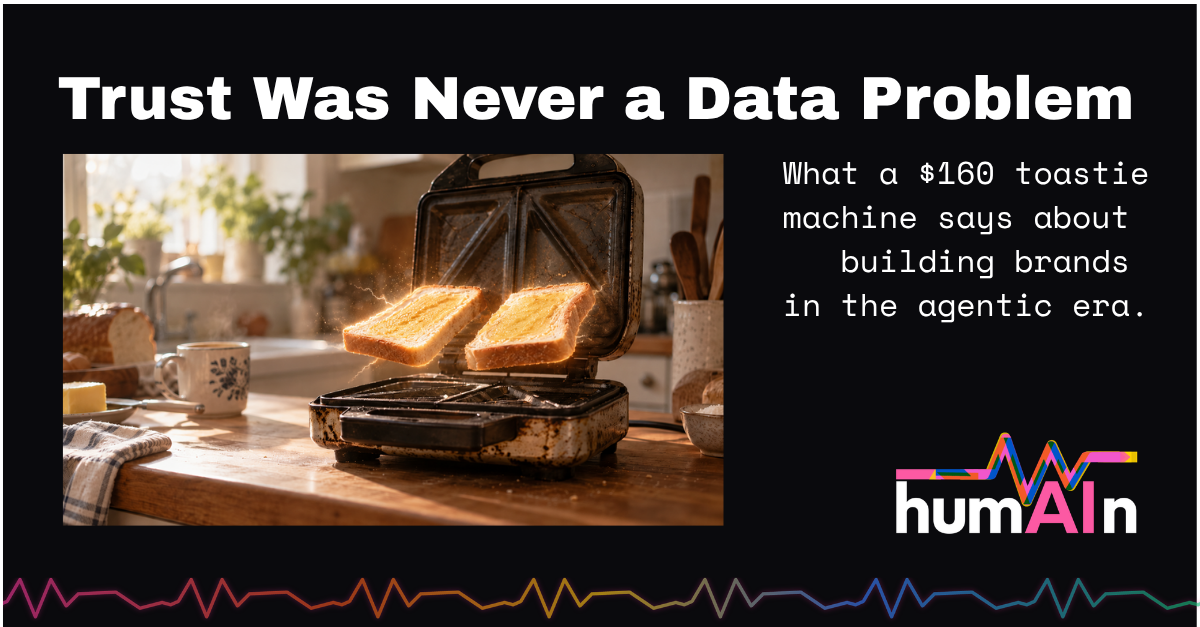
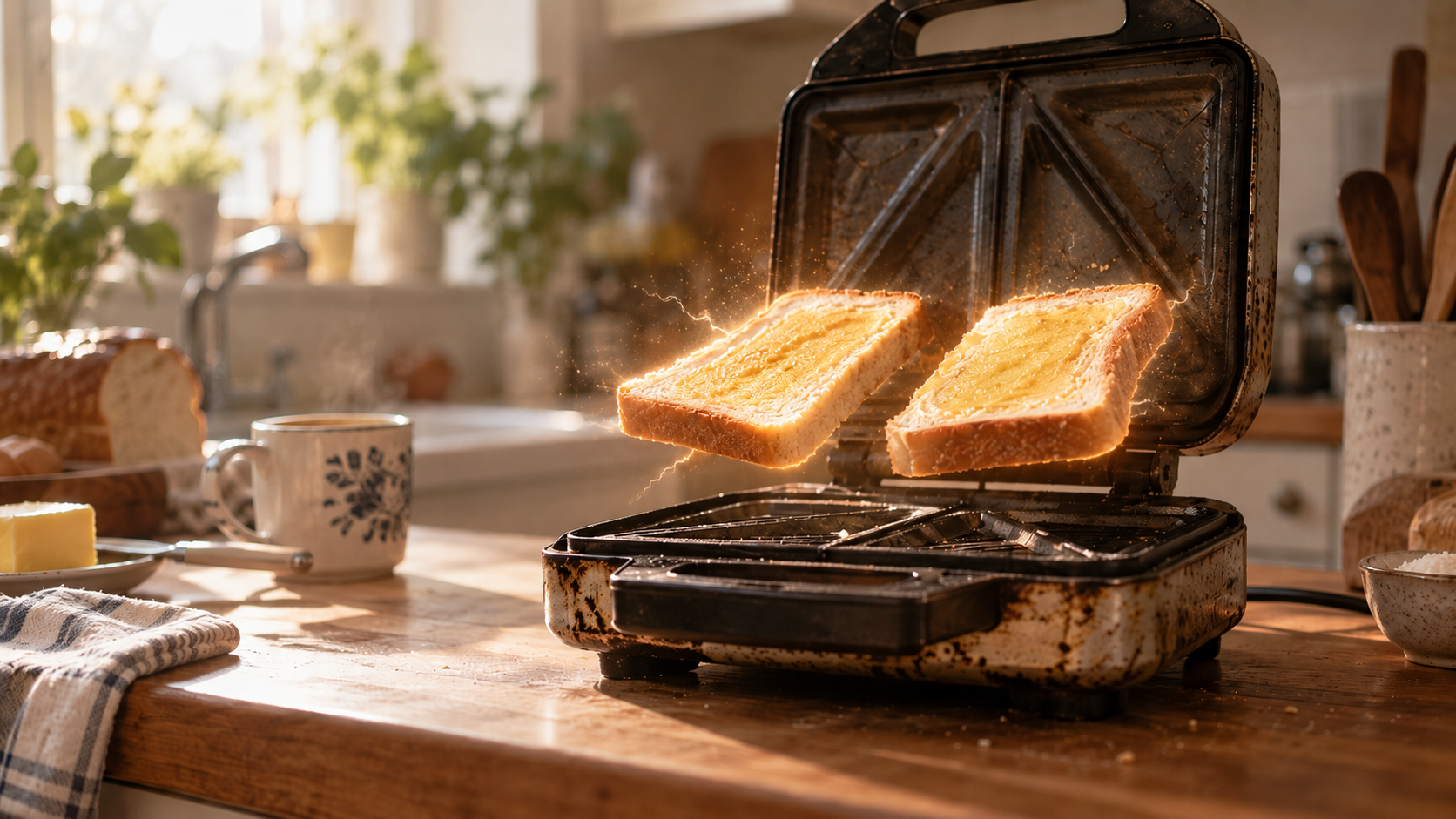
The first kitchen gadget I ever bought was a $12 toastie machine from Kmart in about 2003. That soldier nursed me through countless hangovers, leftover Christmas hams, and sharehouse dinners. After 22 years of faithful service, it finally surrendered last year. Its journey to the bin was a solemn affair.
Under threat of torture, I couldn't tell you the brand, and 22 years in, the plastic case was worn bare so it couldn't have told you itself. My wife came home soon after with the replacement, acquired at the princely sum of $17. The imposter lasted barely a month before the handle snapped under the heft of our concoctions.
I resolved to buy only one more machine. Deep in reviews, and motivated by the gravity of occasion under which the humble toastie maker is summoned, the Breville Classic emerged as a worthy replacement. It had long been in my mind as 'the original' and at $160, you may consider it bourgeois. I consider it being prepared.
Reader: it is perfect. I cannot imagine wrestling a pounding headache on a Sunday morning without it.
Something important happened at that kitchen bench, and as I butter both sides of the whitest of white breads, I find myself pausing on what brands seem to be ceding in their race to maintain visibility.
Erich Joachimsthaler recently wrote about "control points": the interactions that have disproportionate influence over how demand becomes choice. Trust, I'd argue, is the original control point. And economist Guido Möllering gives it an anatomy: trust is a process with two inputs and one output.
- Interpretation: the "good reasons". Features, descriptions, product shots, reviews — everything you weigh before you own the thing.
- Suspension: the leap. Nothing on a review site can tell you whether a toastie machine will have enough leverage to close with your recipes. You hit "buy" without the experience to back it up, and even on repeat purchase the leap recurs, as the quiet assumption that last time predicts this time.
- Expectation: the output. The actual experience, where the Breville is simply what toasties are made on: the ones our toddler will eat, and the ones that become part of that Sunday morning recovery.
Expectation is the asset marketers spend their careers building toward. But there is a gap between what can be verified in advance and the state of trusting. Suspension is the leap that carries the customer through the checkout. We lean on it constantly, mostly without naming it explicitly.
Hitting send on a prompt resolves with a cute animation that suggests the algorithm is 'thinking', and a few seconds later, the user is served a complete answer. Right or wrong, no synapses were fired in forming the recommendation. The new control point is in that moment of synthesis.
The verification infrastructure, such as Google's recent UCP announcement targets the interpretation layer: corroboration across every surface the system can read, claims checked against claims, the feed against reviews against the registry. The output is, in effect, a coherence score - the measure of whether a brand can be recommended.
Corroboration is what the machine calls trust. Verification manufactures good reasons at industrial scale, and good reasons have never been the bit that builds brands.
My Instagram feed shows me the consequences. Scammers and dropshippers are manufacturing exactly the signals the verification infrastructure reads; beautiful photography, glowing reviews, a heritage story in the bio, and the models find enough corroboration to score them favourably. When these brands fail their customers, they fail at the expectation phase, the one place the synthesis is unable to verify.
Agents can't evaluate the leap. There's simply nothing in the data they can synthesise. And prompting in this way, the customer never actually makes the leap either, because choice arrives settled before the process of deliberation and uncertainty are ever felt.
Delegation deletes the trust moment. The customer who'd buy you again without thinking becomes invisible.
Which brings me back to the machine that died. Twenty-two years of flawless service, and I never learned its name. The deepest trust I have ever placed in an appliance, and I never banked any of it. Breville, by contrast, got their name and their shiny metal handle into the 'one day' vault in my brain, which made them stand out when I went looking. When this machine eventually dies after years of faithful service, I won't be asking an assistant for "a good toastie machine". I'll very likely be prompting it to find me another Breville. Those are different commercial events. The first resolves by synthesis, where my twenty-two years count for nothing. The second arrives with trust baked in.
The good news is there's a path here we can measure. Share of demand with your name already in the prompt (call it invocation) is the truest measure of banked trust your brand now has, and it very likely replaces or at least sits alongside share-of-search in your trend reports. Invocation tells you how much demand still forms at the control points where you still matter.
So, two tasks emerge:
1. Do the legibility work, but book it honestly
Clean feeds, structured data, audits of what the models say about you when nobody types your name: all necessary, and all compliance rather than trust-building. Passing the coherence check makes you eligible for recommendation, in the same way it does for every manufactured brand that also passes.
2. Protect the places where people still leap
First purchases, gifts, category switches, Japanese toastie trends (seriously, check them out, they do not mess around), the kitchen bench. Map the moments where a customer still stands with good reasons in one hand but a leap in the other, and defend them from over-automation, because they are the only places new expectation still forms and the only places your name gets into their vault. And when the experience falls short, your ability to make-good is the one moment in the exchange where the brand still holds the risk, so over-delivering matters. The seventeen-dollar machine broke a handle and lost a customer forever.
The Breville owes us until the 2040s. What I can't tell you is whether the process that chose it will still be running when it dies; whether anyone will be standing at the kitchen bench with good reasons in one hand and a leap in the other, or whether the choice will be settled upstream, by a system that reads everything and risks nothing.
Brands are ultimately built on the people who take the leap. What gets built in a world where customers never suspend trust is the question the next few years will answer.
Shane is a brand experience strategistand Senior Industry Fellow in the School of Economics, Finance & Marketing at RMIT. He advises brands on AI, MarTech, brand experience and consumer behaviour. He routinely overestimates what is possible to press between two slices of bread.